 April 29, 2025
Under 30 Minutes
April 29, 2025
Under 30 Minutes
April 29, 2025
Under 30 Minutes
April 29, 2025
Under 30 Minutes 




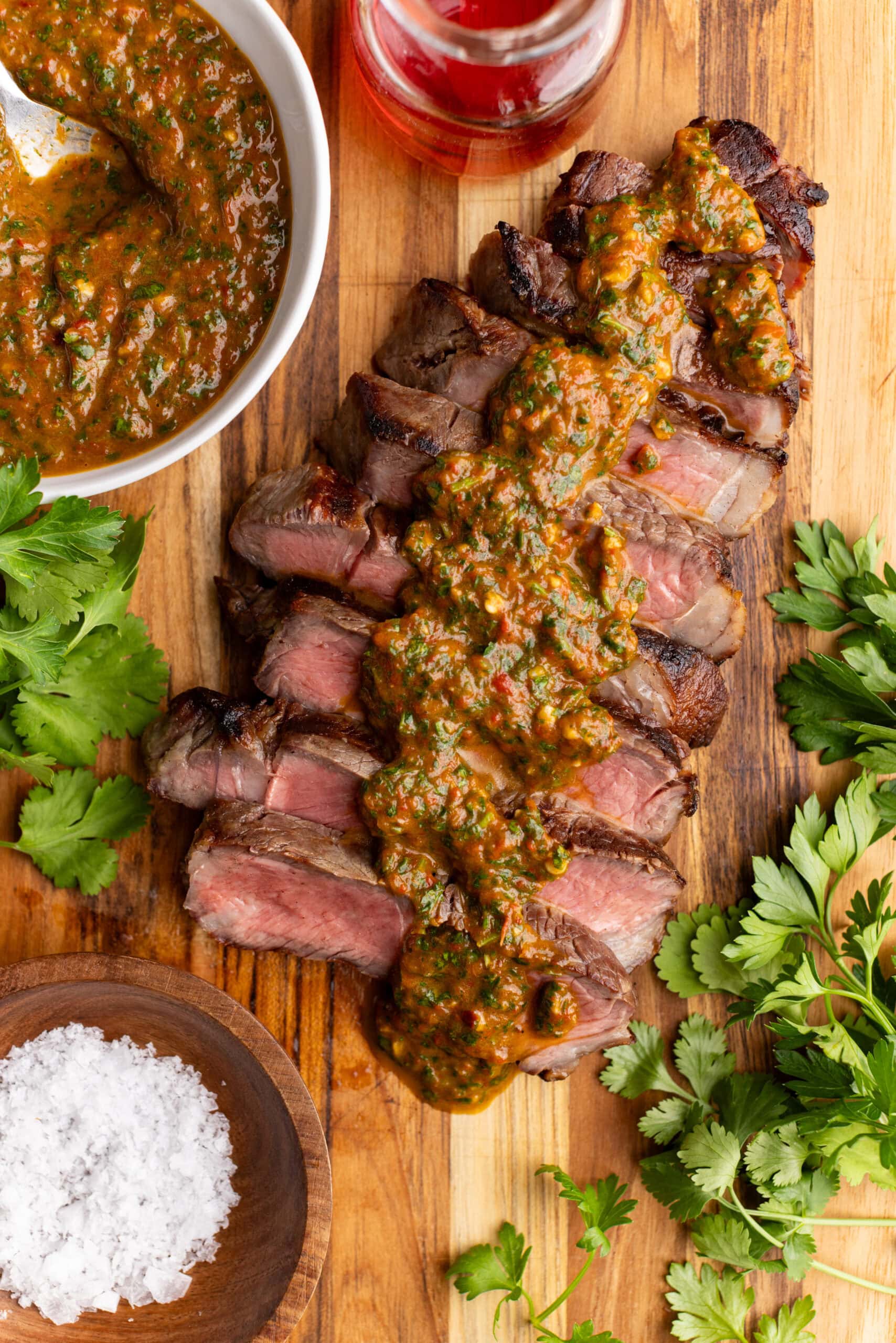
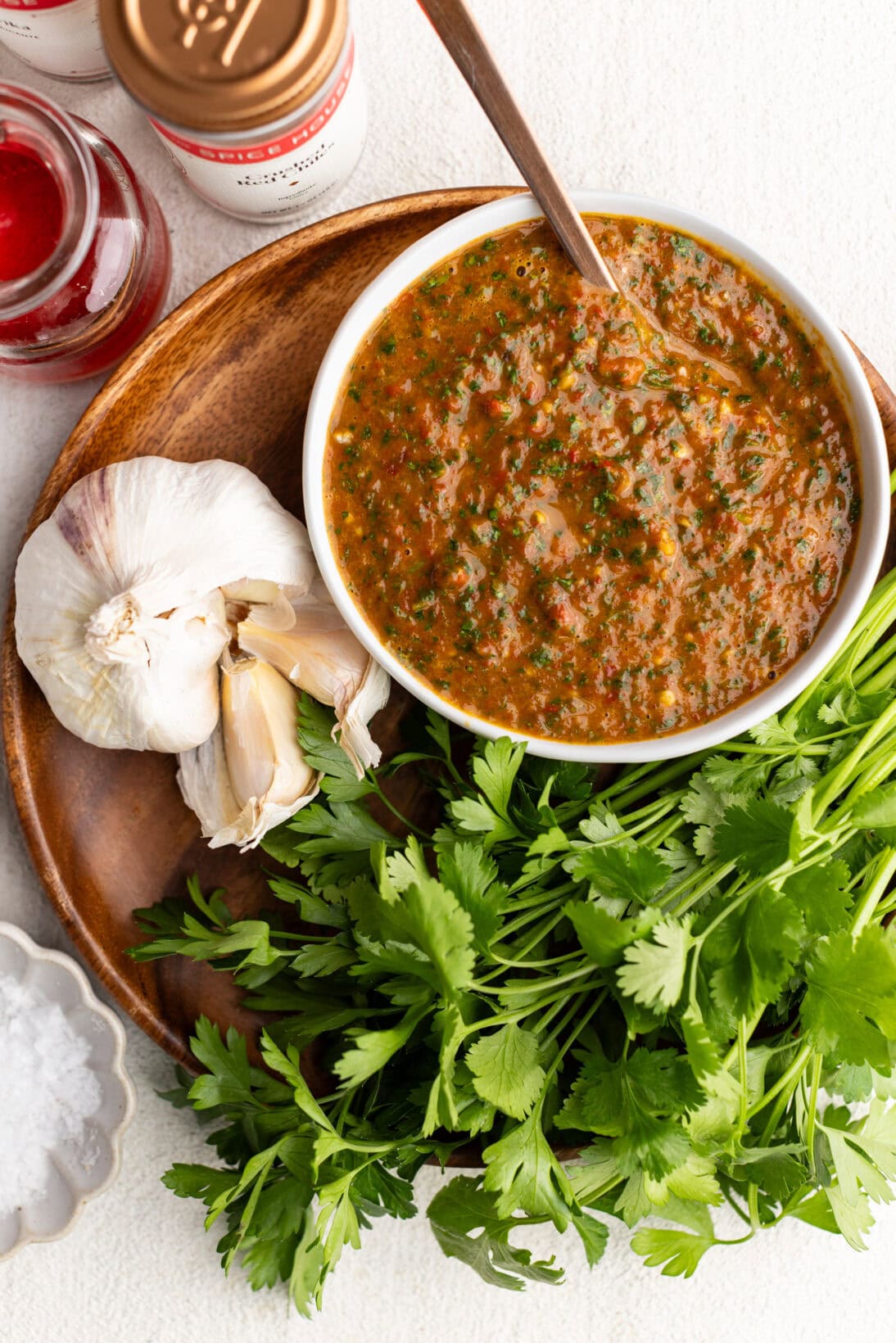
This slightly smoky, slightly sweet Chimichurri Rojo is packed with herbs, a hint of acidity, and a ton of flavor. If you’re a fan of green chimichurri, it’s time you tried its distant relative, which is just as easy to make—and dare I say, might be even more delicious
Want to level up your cooking? Want to turn a dish from great to spectacular? The key is sauces. This Red Chimichurri—also known as Chimichurri Rojo—is a staple in my house, and for good reason. It’s smoky, herbaceous, and BOLD, perfect for a dozn different dishes (and then some). If you landed on this page in search for a Chipotle Chimichurri Rojo copycat, this is the recipe to make: slightly less oil, but the same zesty flavor.
On a sauce kick? Check out my herbaceous Zhoug, or Tonnato for two other sauce options to level up your cooking.
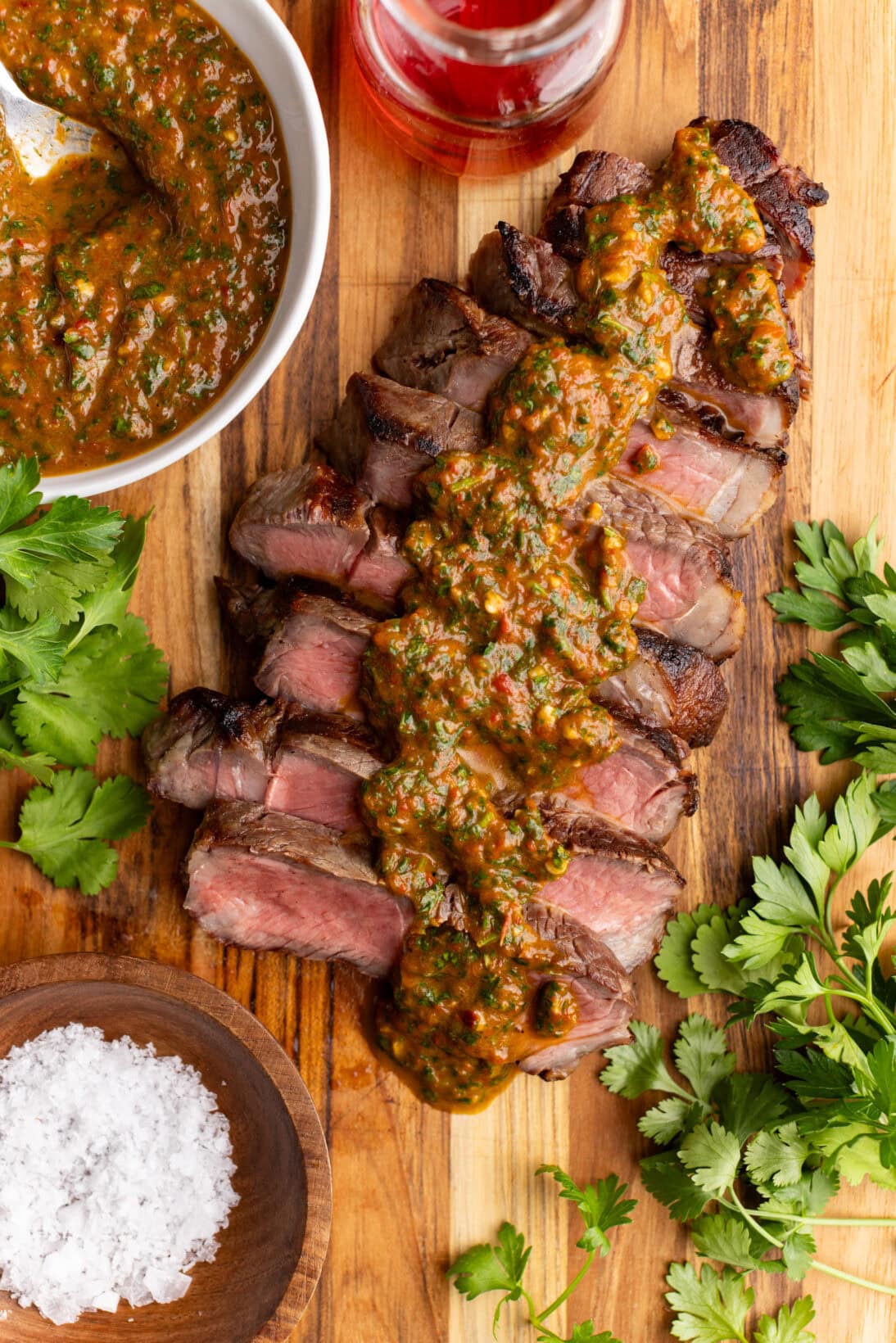
If you’ve never had this sauce—or if you’re only familiar with green chimichurri—it’s time to try it. Chimichurri rojo is a smoky variation of the classic, herb-forward, oil-based green chimichurri. This popular Argentinian condiment is herbaceous and smoky, slightly sweet with a subtle kick. While it’s designed to be paired with meats, it also works beautifully as a marinade.
So what’s the difference between green chimichurri and red chimichurri? Green chimichurri is traditionally made with parsley (sometimes cilantro), onion, garlic, oil, and vinegar. There are plenty of variations, but the base is simple. Chimichurri rojo, on the other hand, adds smoked paprika and roasted red bell pepper, and in this version, plenty of cilantro to brighten it up. Both sauces are fantastic, adding acid and bold flavor to whatever you serve them with.
Unlike some other red chimichurri recipes, this one uses just two small cloves of garlic, so it won’t leave a lingering aftertaste. And compared to Chipotle’s version, it’s lighter on oil and never tastes greasy.
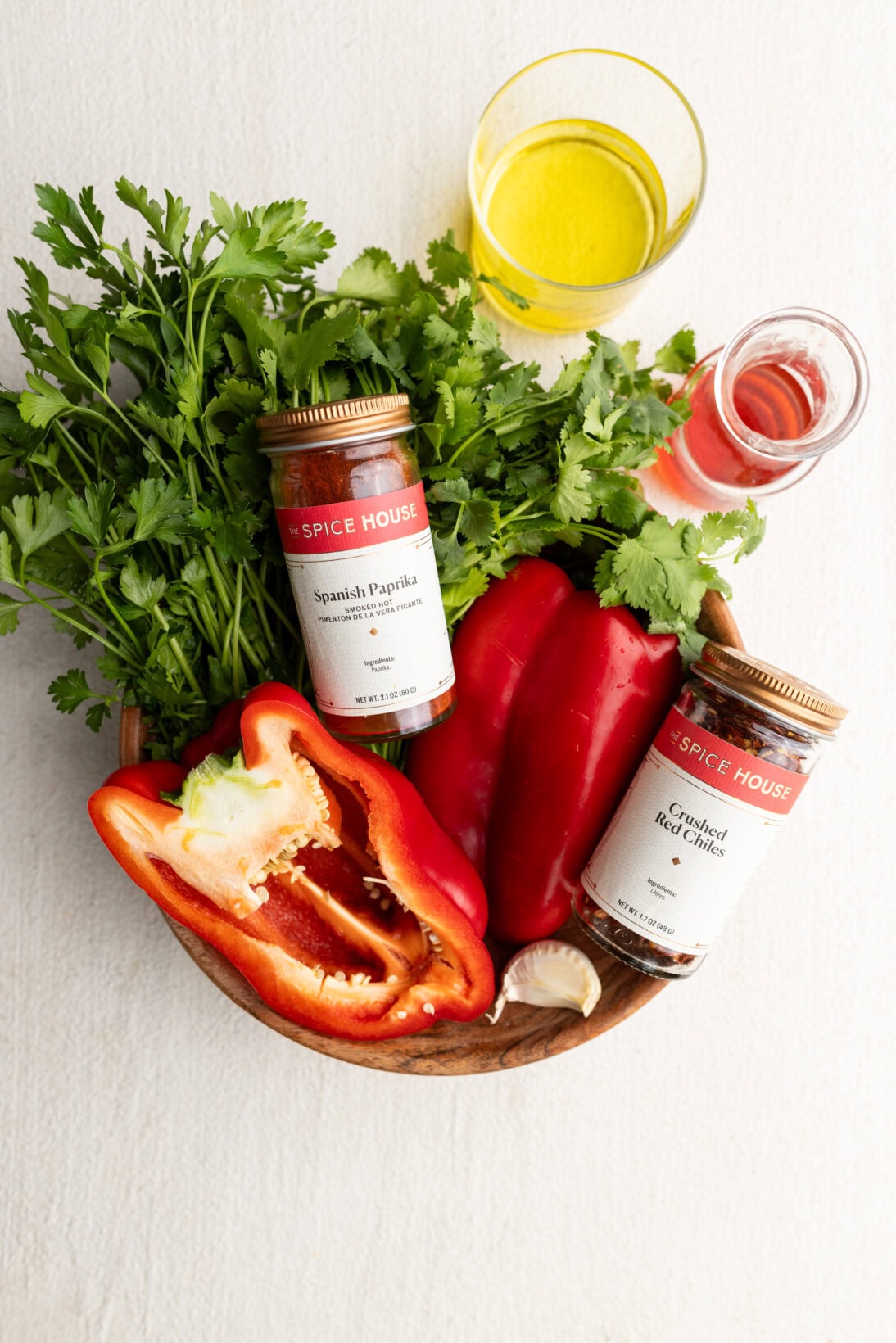
1. Roast the Bell Pepper – Preheat the oven to 400°F. Place the whole, cleaned bell pepper on a sheet tray and roast for 30–35 minutes, rotating it every 10 minutes for even cooking. When done, the bell pepper skin will be saggy, slightly charred, and the pepper itself will be deflated.
Remove from the oven and allow it to cool for 10 minutes. Once cooled, pull off the stem (the seeds should come with it) and peel away the skin, discarding it.
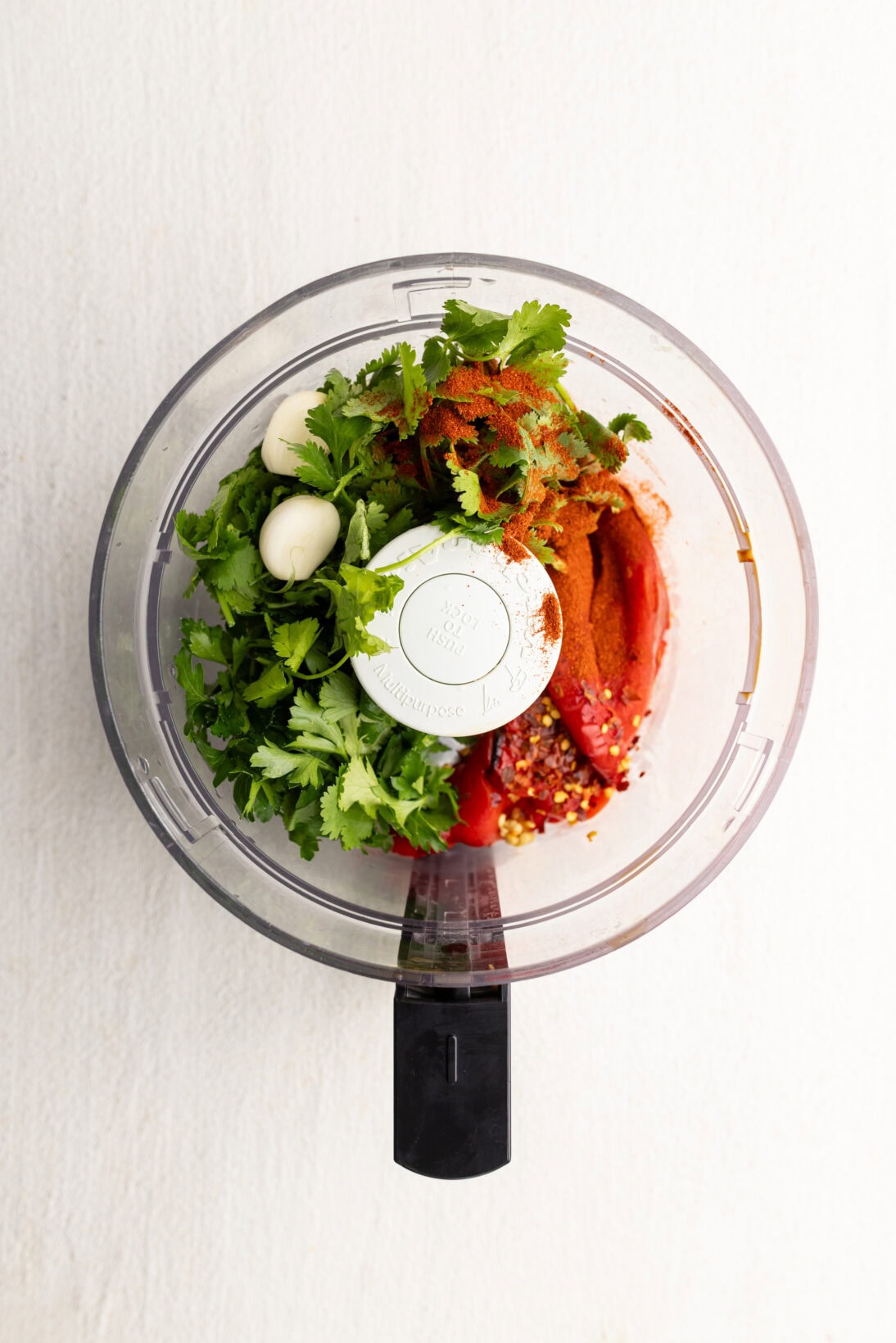
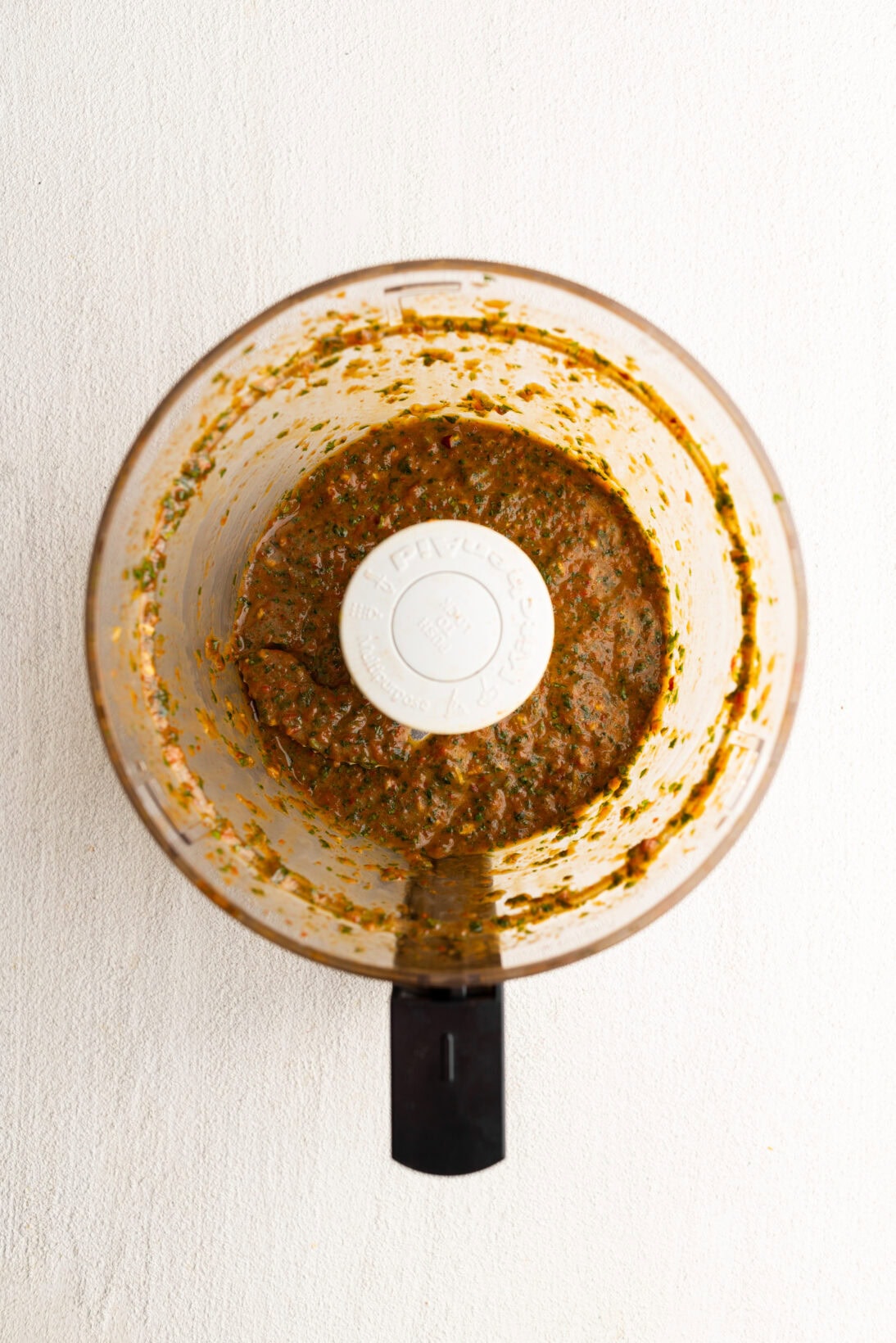
2. Make the Red Chimichurri — In a food processor, add the roasted red pepper, garlic cloves, cilantro (stems are okay), parsley (remove the thick, woody stems), smoked paprika, red pepper flakes, and a generous pinch of salt. Pulse or run on low until the ingredients are finely minced. Scrape down the sides, then pour in the olive oil and red wine vinegar. Run on low for 10–20 seconds, until the sauce emulsifies and comes together. If needed add more salt to taste. **makes 1 1/4 cup of chimichurri rojo.
3. Chill – The sauce needs to chill for 10 minutes or longer for the flavors to develop and come together.
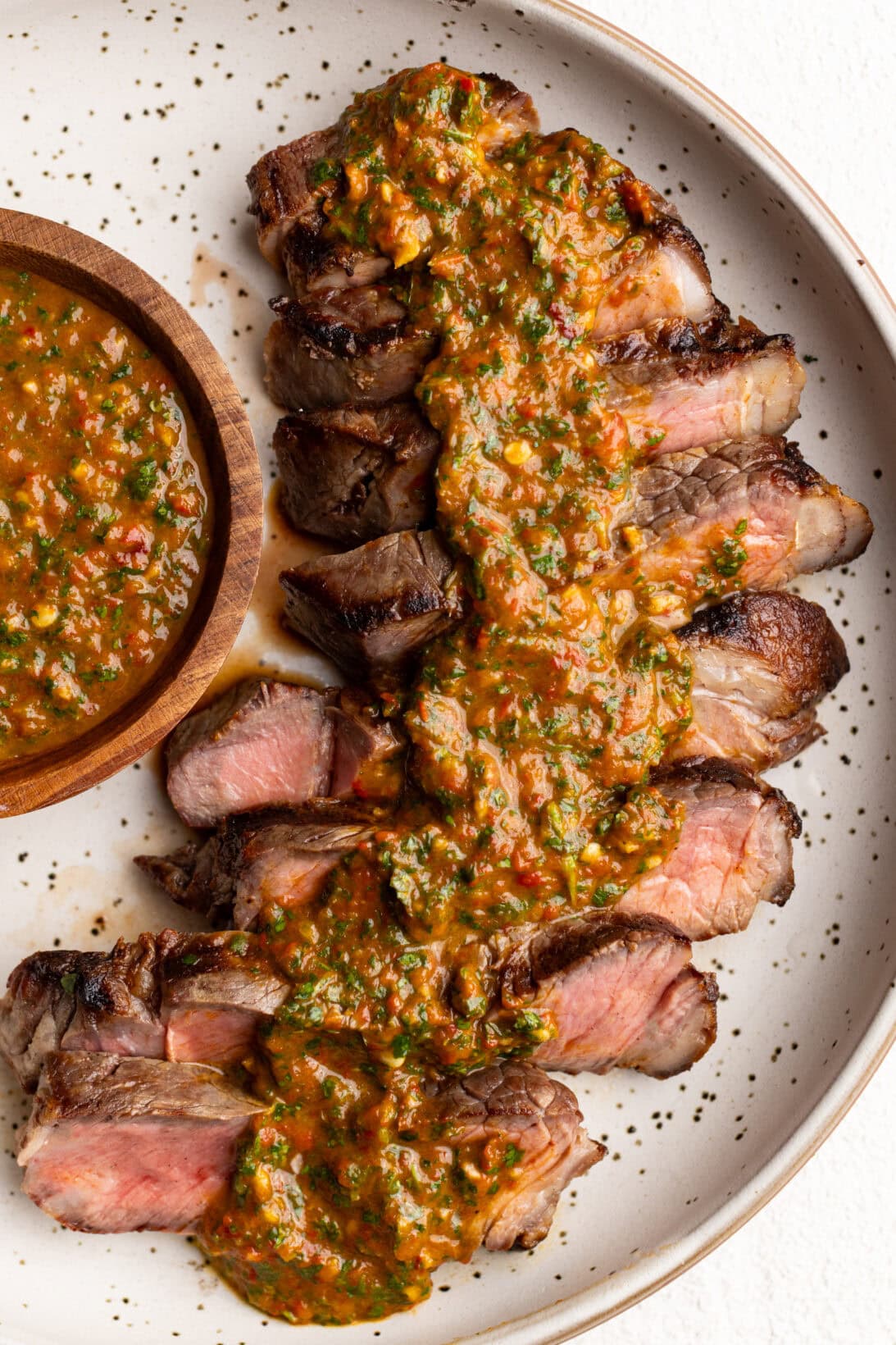
The first time I made this, I ate it straight off the spoon. This chimichurri rojo recipe is made to be enjoyed with meat—whether it’s red meat like the steak pictured (skirt steak or flank steak are great options), grilled chicken, or lamb. You can also use it as an overnight marinade.
Aside from meat, serve it over your favorite rice or grain bowl, or spice up grilled or roasted vegetables—eggplant and zucchini pair especially well—with a generous spoonful on top.
Yes, while the flavor is best with freshly roasted bell peppers you can substitute it for 8oz of jarred.
Yes, and letting it sit allows the flavors to come together, resulting in better flavor.
Yes, but the flavors are best when you don’t. Leftover chimichurri rojo can be frozen for 1–2 months. My recommendation is to freeze it flat in a zip-top bag or in a small ice cube tray, then transfer the frozen cubes to a freezer bag.
You can, but the sauce won’t emulsify. Mince all the ingredients and add to a bowl, mix to combine.
Red chimichurri can be stored in an airtight container in the refrigerator for up to a week. For longer storage, you can freeze it for up to a month. To freeze, spoon the sauce into ice cube trays and place them in the freezer. Once frozen, pop the cubes out and transfer them to a freezer bag. Thaw in the fridge before using.
April 29, 2025
Under 30 Minutes  April 29, 2025
Seafood
April 29, 2025
Seafood  April 29, 2025
Meat + Chicken
April 29, 2025
Meat + Chicken  April 29, 2025
Sauce, Condiments & Spreads
April 29, 2025
Sauce, Condiments & Spreads 
 February 25, 2022
Sauce, Condiments & Spreads
February 25, 2022
Sauce, Condiments & Spreads  August 30, 2022
Sauce, Condiments & Spreads
August 30, 2022
Sauce, Condiments & Spreads  April 18, 2024
Recipes
April 18, 2024
Recipes  October 6, 2024
Sauce, Condiments & Spreads
October 6, 2024
Sauce, Condiments & Spreads
This chimichurri rojo is so delicious I deliberately left over enough to use on other things. It’s smoky flavor is so on point and amplified the steak I almost overcooked (totally my fault). I can’t wait to make this again!