 November 4, 2022
Pasta, Noodles & Grains
November 4, 2022
Pasta, Noodles & Grains
November 4, 2022
Pasta, Noodles & Grains
November 4, 2022
Pasta, Noodles & Grains 




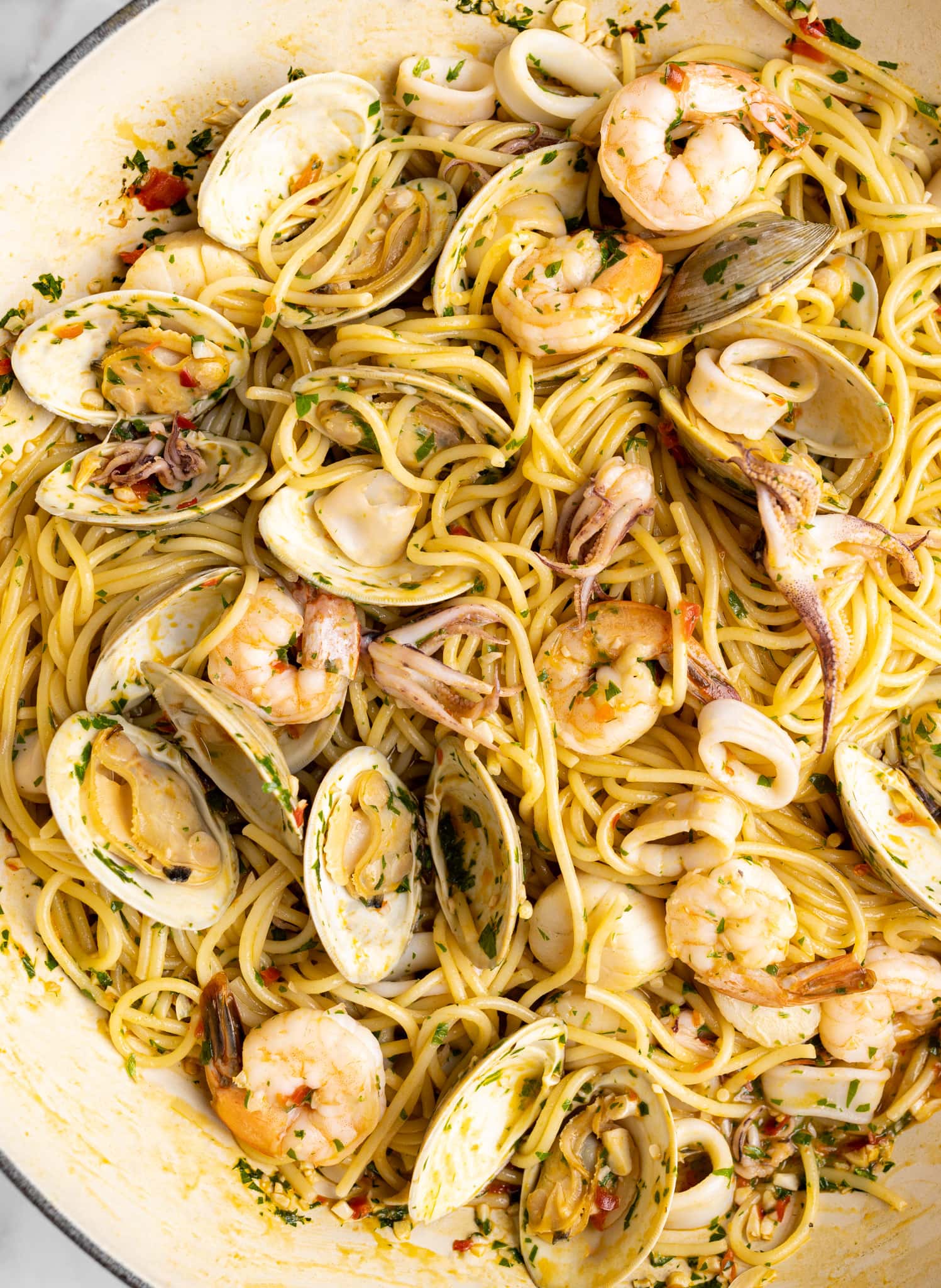
Hello Summer! And hello summer dishes. I don’t know about you, but my seafood consumption increases drastically when it hits the warmer months. This seafood pasta combines three of my loves, a copious amount of seafood, carbs, and a kick of heat. There is no reason to not make a restaurant quality seafood dish at home, so if you were thinking about making something a little over the top, this is the dish that will please any seafood lover.

Repeat after me… I will not overcook my seafood. There is nothing worse than putting the time into a dish for it to only be ruined by overcooked chewy seafood. In order to get it right this recipe does require a little extra love and labor to nail the timing.
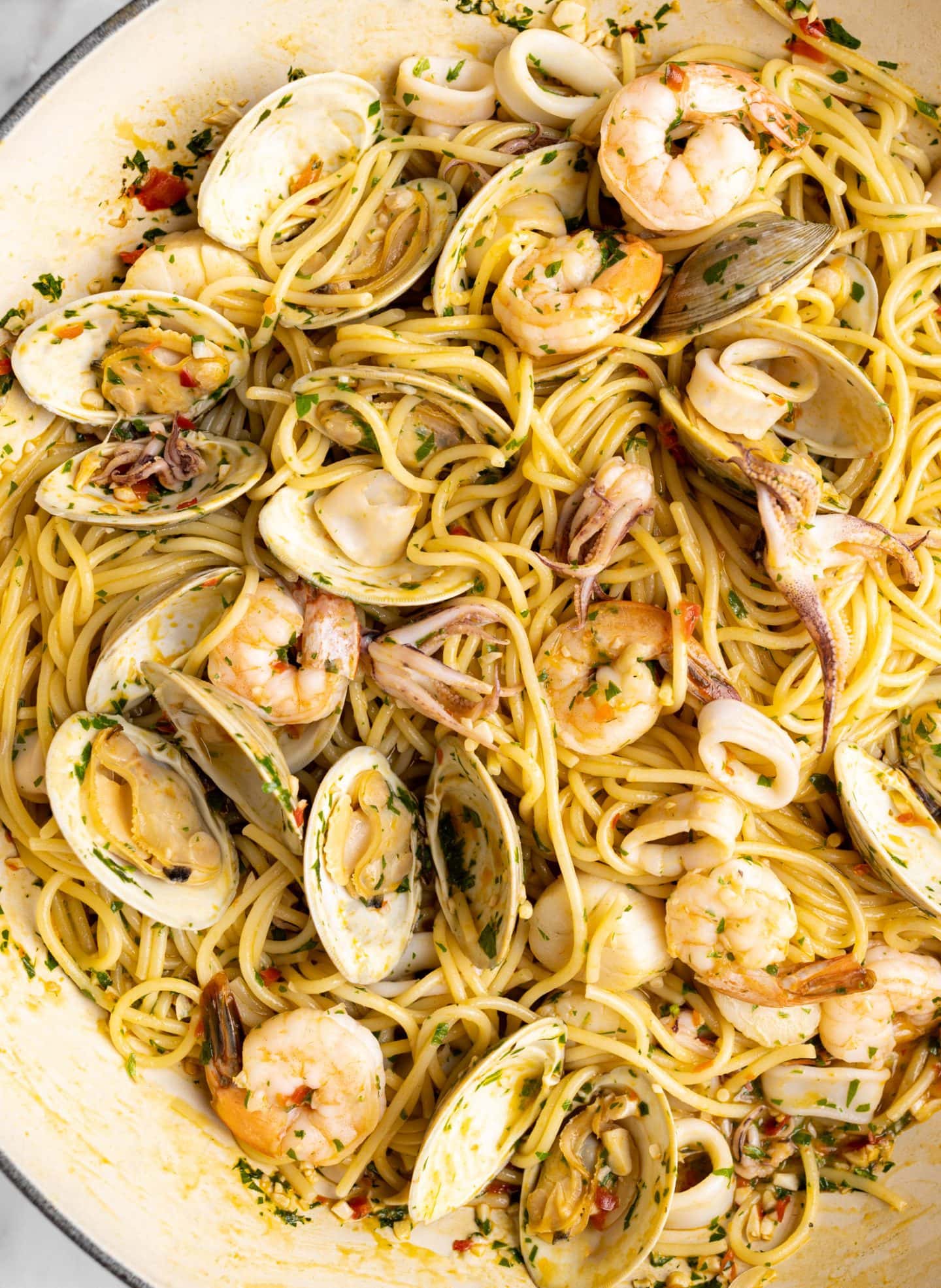
Surprise! Not all seafood cooks the same. While I used shrimp, squid, scallops, and clams, there are other seafood you can add or swap. Below are some options as well as when to cook them to ensure they are done perfectly.
Small shrimp is recommended for this dish, however avoid the super small key west shrimp, those cook fast and aren’t forgiving. Frozen is a great option, just make sure they are completely defrosted and patted dry before cooking.
I can’t recommend enough to get tubes and tentacles. If the tentacles aren’t your thing I totally understand… little legs. I always buy my squid fresh from Whole Foods, but frozen works too!
Scallops add a lovely sweet bite to this dish. I usually buy frozen scallops because let’s be honest for this dish its not worth $30+ a lb. If this was a scallop only dish I would say splurge, but this is just an accent to the dish not the main star.
This dish doesn’t need many but clams adds a great flavor once they open and release juices into the sauce.
Although they weren’t added to this recipe mussels are an excellent add/sub.
While I think its a waste to add lobster meat to this dish because frankly it will get lost in the mix, it is an option.
.

Wide Pot/Pan – If you have a braiser or Dutch oven take it out. This dish needs a pan that has a bit of depth to hold all the seafood and pasta at the end. A wide sauté pan is also a great option.
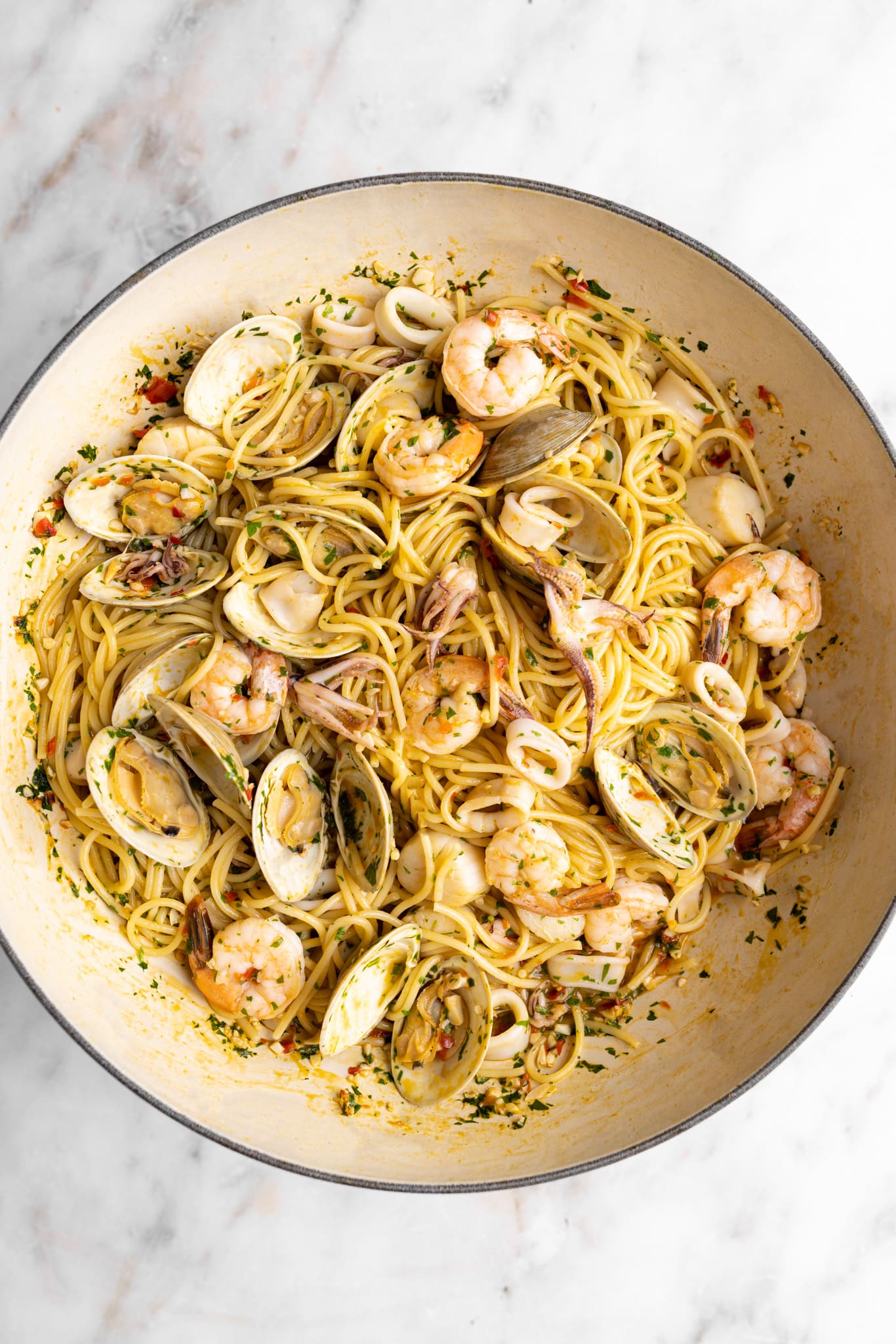
It might feel annoying to cook seafood and then take it out and then cook some more and take it out, but if you are looking for perfectly cooked seafood in this pasta it is going to require a little work. This recipe is no way difficult, but reading and following the directions are important to get that creamy pasta water sauce.
If you haven’t already read the above passage on cooking seafood, go ahead and read it. The below step by step is for scallops, squid, shrimp, and clams, with notes for subs or adds.
Cook the Pasta – Before cooking the seafood boil the water for the pasta. You are going to need the pasta water midway through. In a large pot cook the pasta as per packaging in salty water pulling it out 3-4 minutes before done. It is SO important you pull it out before it’s even al dente. The pasta will continue to cook once you add it to the pan later. Reserve 1 – 1 1/2 cups of pasta water before you drain and place on the side.
Cook the Seafood – Cook the scallops in a separate large skillet. Add 2 tbsp of extra virgin olive oil to a small frying pan over medium heat. Cook for 1-2 minutes each side and remove from the heat. In a large deep pan add 2 tbsp of olive oil. Add the cleaned shrimp and squid. Cook for 2-3 minutes, and remove from the pan. You may notice that the squid and shrimp released a lot of moisture, that is okay.
Start the Sauce – Add 2 tbsp of butter to the pan. Once melted add the minced garlic and cook on low-medium heat for 2 minutes. Stir in the Calabrian chili paste and cook for another minute. Deglaze with white wine and 1/3 cup of the reserved pasta water. Add the clams (and potentially mussels), and put a lid on the pan. Let the clams steam until they are fully open.
Add the Pasta + Seafood– Add the undercooked pasta, another 1/3 cup of pasta water, and the par cooked seafood, and parsley. Give it a thorough toss. Cook on low, continuously tossing the pasta allowing it to finish cooking in the wine/pasta water. As the pasta continues to cook it will release more starch and thicken the sauce.
Here is where you have to use intuition. As the pasta cooks, you may notice that it has absorbed too much of the sauce. If that is the case add some more pasta water a few tbsp at a time and continue to mix. This process should take about 3-4 minutes. Careful to not overcook the pasta. Also at the end make sure you salt to taste, salting is not listed as an official instruction because the pasta water is salted, so chances are you don’t need any more. But just in case!
The finished product will be silky, not watery. At the last minute throw in another tbsp of butter. If it is still watery continue cooking the pasta to thicken it up. For an extra splash of freshness feel free to squeeze fresh lemon juice on top.
*Always check on the doneness of the seafood before serving.

There is no reheating seafood pasta. Eat it.
Looking for more seafood? Check out the recipes below!
Old Bay Garlic Shrimp Pasta
Portuguese Garlic Shrimp
Steamed Miso Cod
This post contains affiliate links, which means that I may receive a commission if you make a purchase using these links. As an Amazon Associate I earn from qualifying purchases.
 November 4, 2022
Pasta, Noodles & Grains
November 4, 2022
Pasta, Noodles & Grains  April 18, 2024
Recipes
April 18, 2024
Recipes  May 1, 2024
Pasta, Noodles & Grains
May 1, 2024
Pasta, Noodles & Grains  September 25, 2024
Pasta, Noodles & Grains
September 25, 2024
Pasta, Noodles & Grains
RATE + REVIEW