What I love most about specializing in globally inspired cooking is discovering the street foods of the world. Japan has tori karaage, the Middle East has shawarma, and Thailand—well, let’s just say it has plenty of contenders. When my husband proposed and asked where I wanted to go for our honeymoon, the answer was simple: Thailand. For the food. And man, did I eat.

Thai cuisine will always hold a special place in my heart, and Moo Ping is one of those dishes I still dream about. These flavorful grilled pork skewers are surprisingly approachable to make at home and are perfect for entertaining, backyard cookouts, or any summer grilling night.
Why You’ll Love This Recipe

  • Global Cuisine at Home: This is the kind of dish to make when you want to shake things up and break out of the rut of eating the same meals over and over. Built on bold Thai flavors, it combines ingredients you may already have on hand with a few worth seeking out at your local Asian market. The result is a flavor-packed dish that will transport your taste buds somewhere new.
  • Budget-Friendly Entertaining: Compared to many other cuts of meat, pork is an affordable option, making this a budget-conscious dish that doesn’t sacrifice flavor. It’s the perfect recipe when you want to impress guests without overspending.
  • Better Than Takeout: I SAID IT! Sorry, but it’s true. Because the pork marinates for an extended period of time, it absorbs an incredible amount of flavoR. Far more than you’re likely to get from your average takeout order. The result is juicy, deeply seasoned pork skewers that are well worth the extra planning.
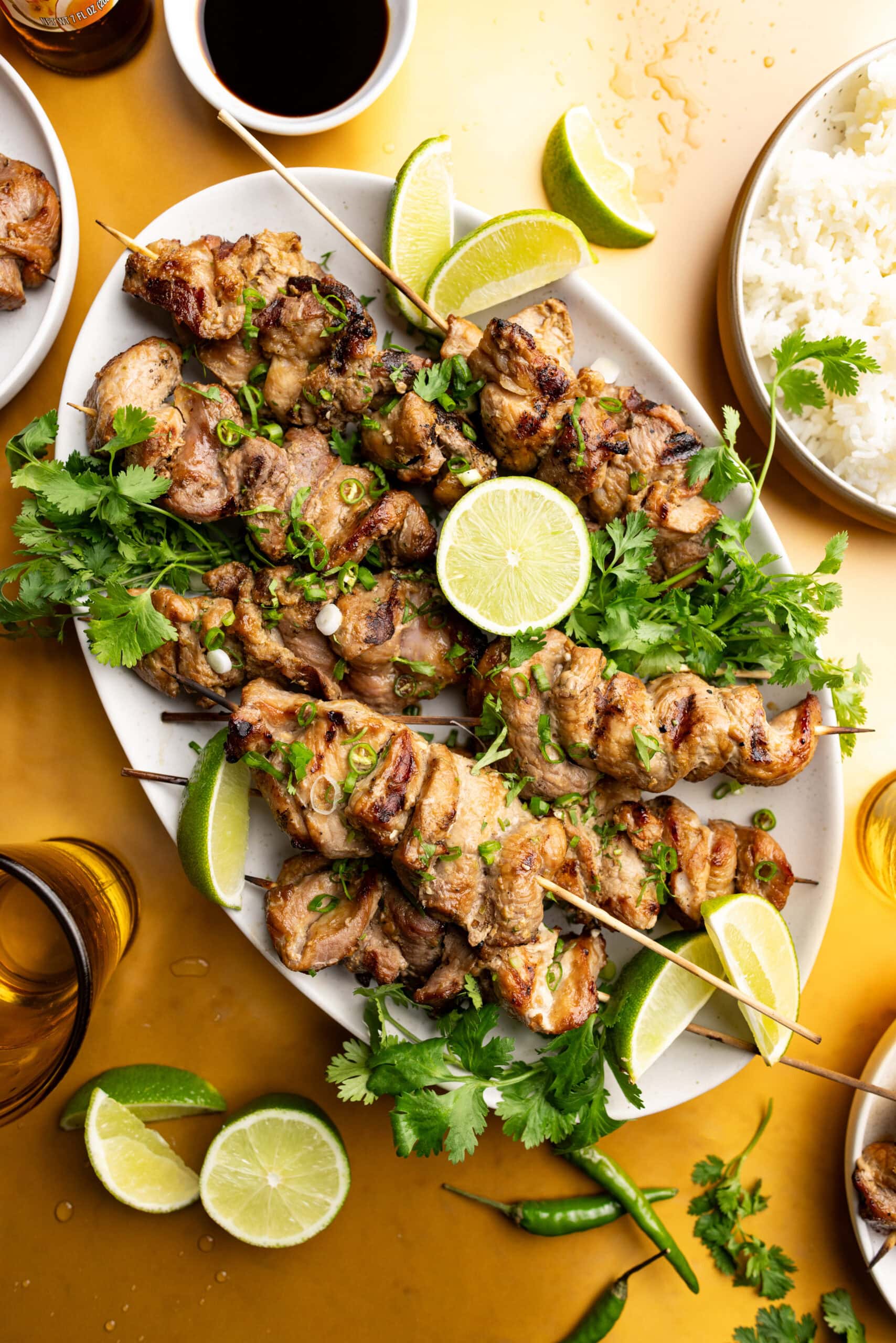
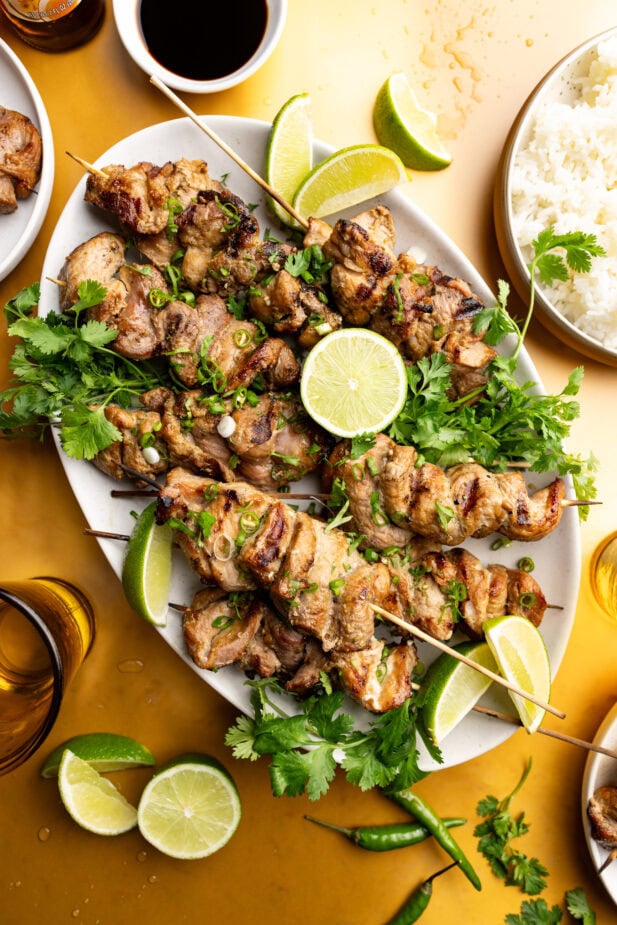
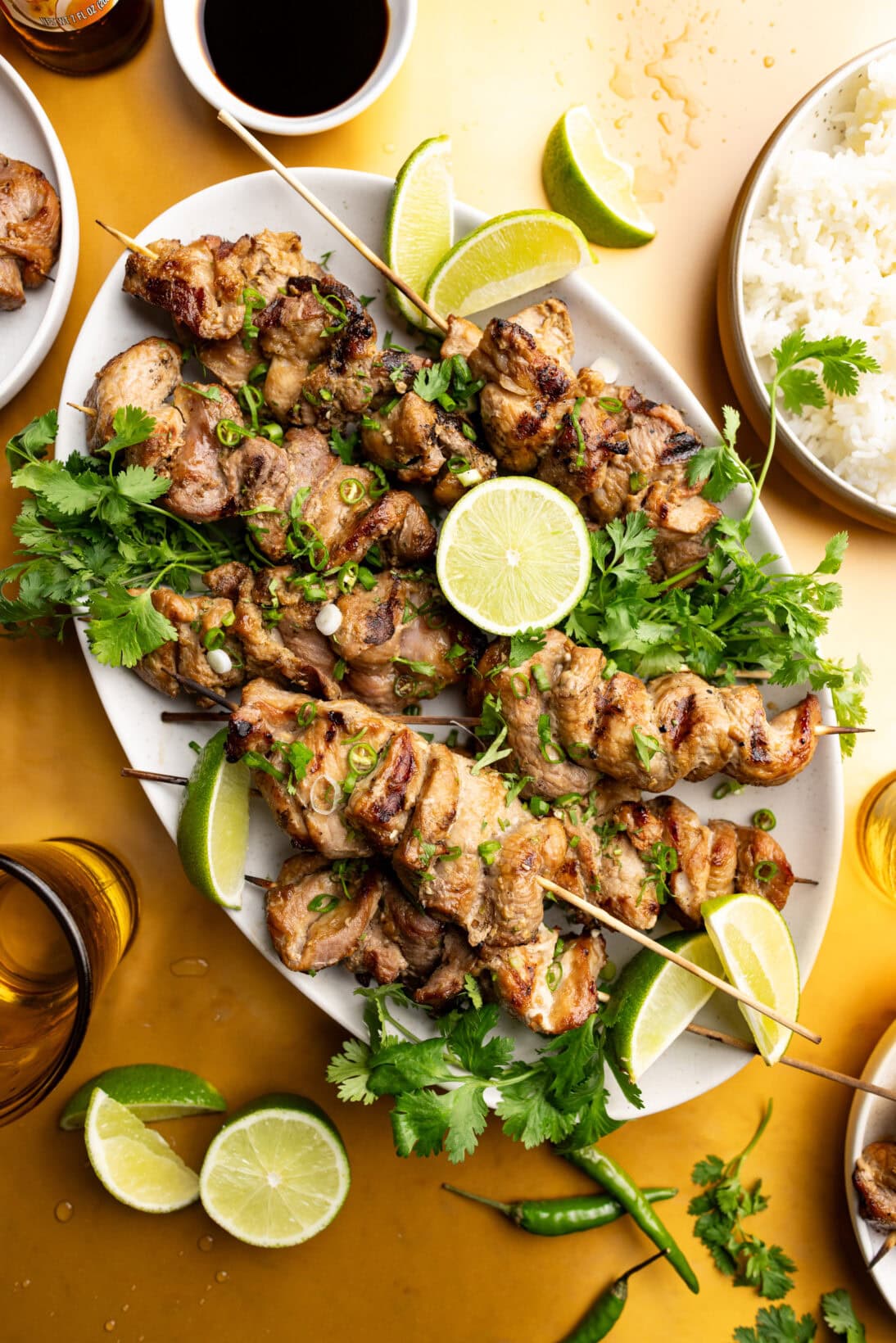
a serving plate of moo ping skewers topped with chilies, cilantro, green onions and limes.

What Is Moo Ping?

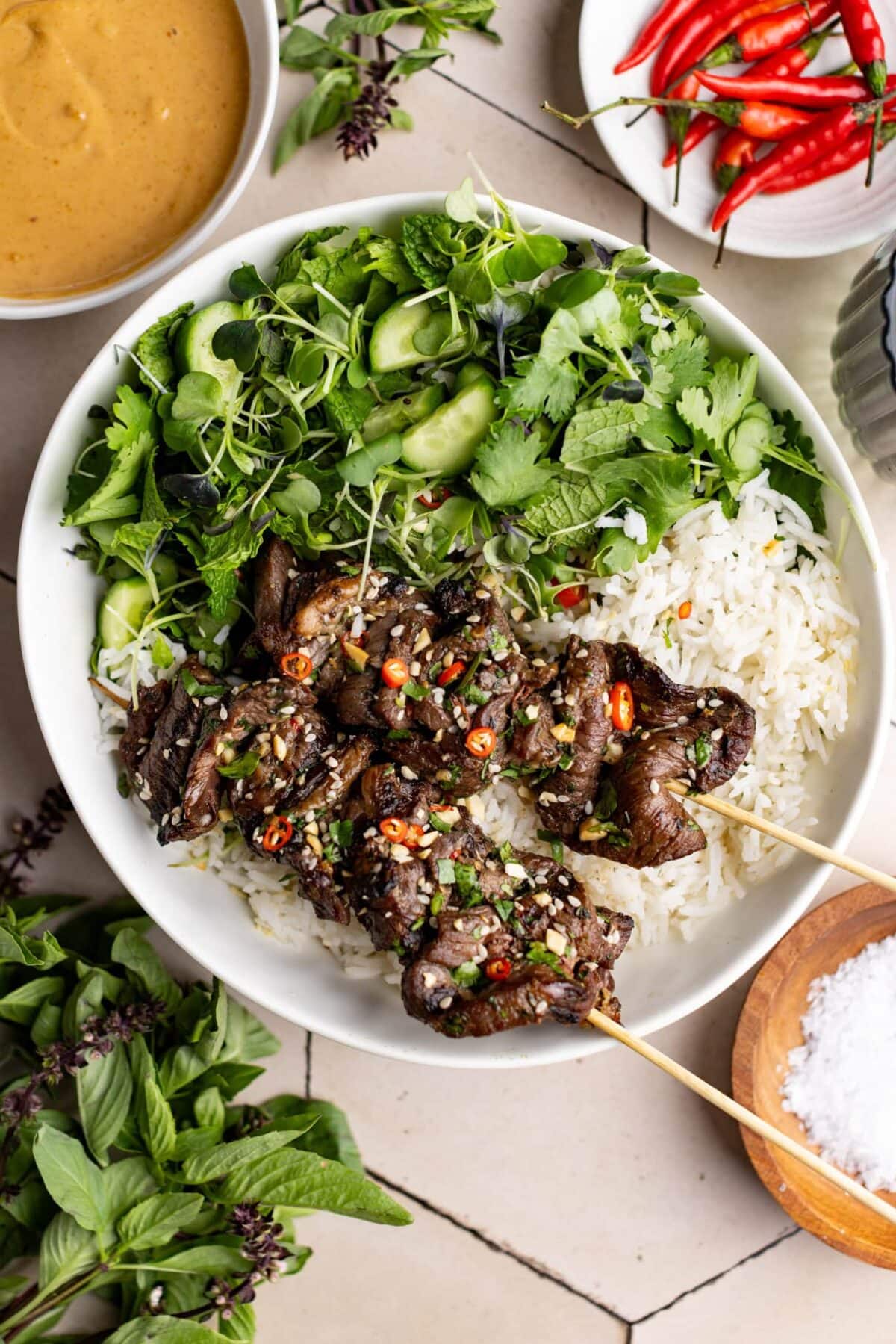
Translating to (moo) pork and (ping) grilled, these skewers are a popular Thai street food found throughout Thailand. First, let’s be clear—moo ping is not satay. While both are marinated meats cooked on skewers, they are distinctly different. Moo ping is exclusively pork, marinated in a balanced sweet-and-savory mixture, using coconut milk to lend a subtle sweetness. Satay, on the other hand, is mostly savory, can be made with chicken, pork, or beef, and is served with that iconic peanut sauce. Both are approachable recipes to make at home, and if you are looking for satay i suggest you visit my Beef Satay recipe.
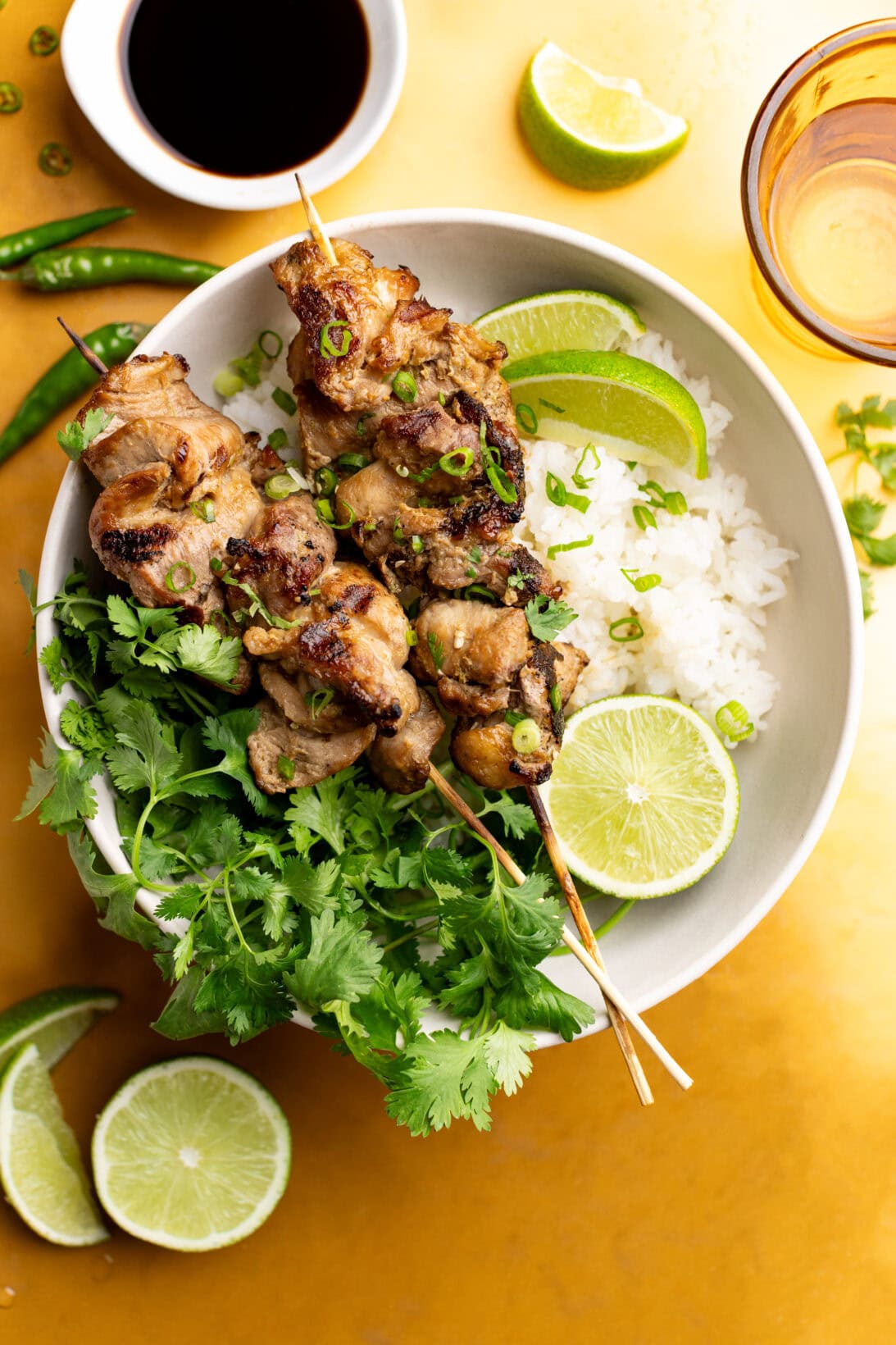
a bowl of sushi rice and moo ping skewers.

What You’ll Need For Moo Ping

  • Pork Shoulder – Boneless pork shoulder is the best cut for these moo ping skewers, but pork butt also works well. Just make sure it’s boneless, the pork needs to be sliced prior to marinating and the bone is a pain to cut around (not impossible, just a pain if you cut it out yourself.)
    • Can I use pork loin? No! These skewers need fat to stay moist. Pork shoulder or pork butt have just the right amount of marbling, which, when rendered and combined with the savory marinade, brings the whole recipe together.
  • Coconut Milk – Unsweetened. Coconut milk is already slightly sweet and cuts into the umami of the soy and fish sauce.
  • Cilantro Stems – You read that right—stems or roots (though roots are much harder to find). If you didn’t already know, a lot of the flavor is in the stems. Traditionally, this recipe calls for the cilantro roots or coriander roots, which have a more intense, earthy flavor compared to the floral, fragrant notes of the leaves. Save the leaves for serving!
  • Soy Sauce
  • Dark Soy
  • Oyster Sauce
  • Brown Sugar – Dark or light works for this recipe.
  • Fish Sauce – I swear the older I get the more I appreciate fish sauce. If you have a favorite, use that. If not I like to use Red Boat or Ka Me. Both are well-balanced, not overly pungent, and won’t overpower the dish.
  • White Pepper – Color here matters. Black pepper is slightly spicy with a bite, while white pepper is more mild.
  • Garlic – Fresh only!
  • Sushi Rice (for serving)

Tools Needed

  • Skewers – You’ve got two options here: wooden or metal skewers. Each has its perks, but I tend to prefer wooden. If you go that route, be sure to soak them ahead of time—though no matter how long you soak them, they’ll still char a bit. Metal skewers are great if you have them, but keep in mind they get incredibly hot and can make it tricky to remove the meat without burning yourself, even after they’re off the grill.
  • Blender or Smoothie Blender – The marinade should be blended until smooth before adding it to the pork. I use a hand (or smoothie) blender for 90% of my blending needs because it’s just so convenient, but a traditional blender works just as well.

How To Make Moo Ping

1. Prep the Pork – Using a sharp knife, cut the pork into ¼-inch-thick strips, about 3 inches long, ideally slicing against the grain if you can identify it. Don’t worry too much about the length, thickness is more important here. It’s perfectly fine if some pieces are longer or shorter than others. Place the pork in a large bowl with a generous pinch of salt and set aside.
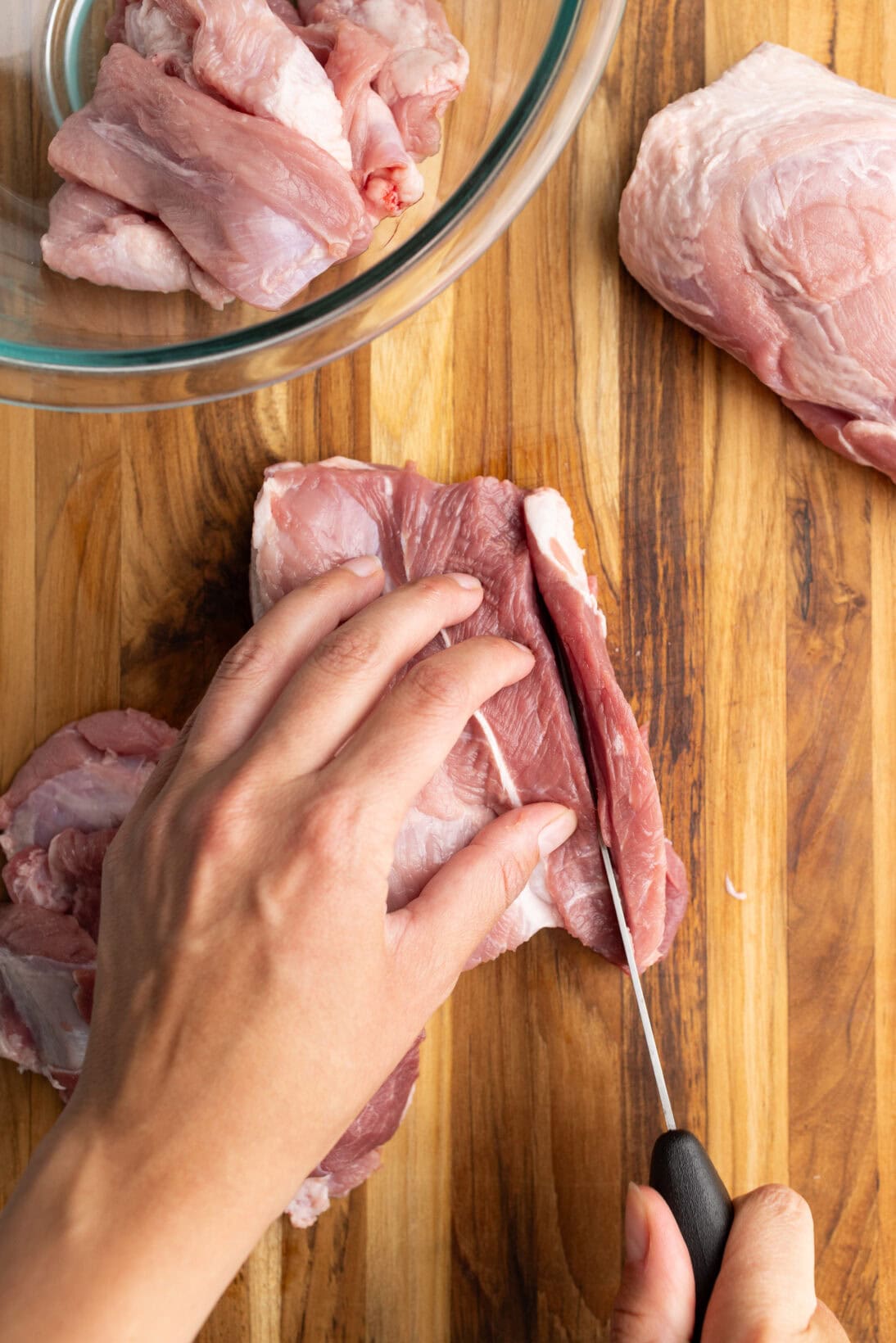
step by step: prepping the pork.

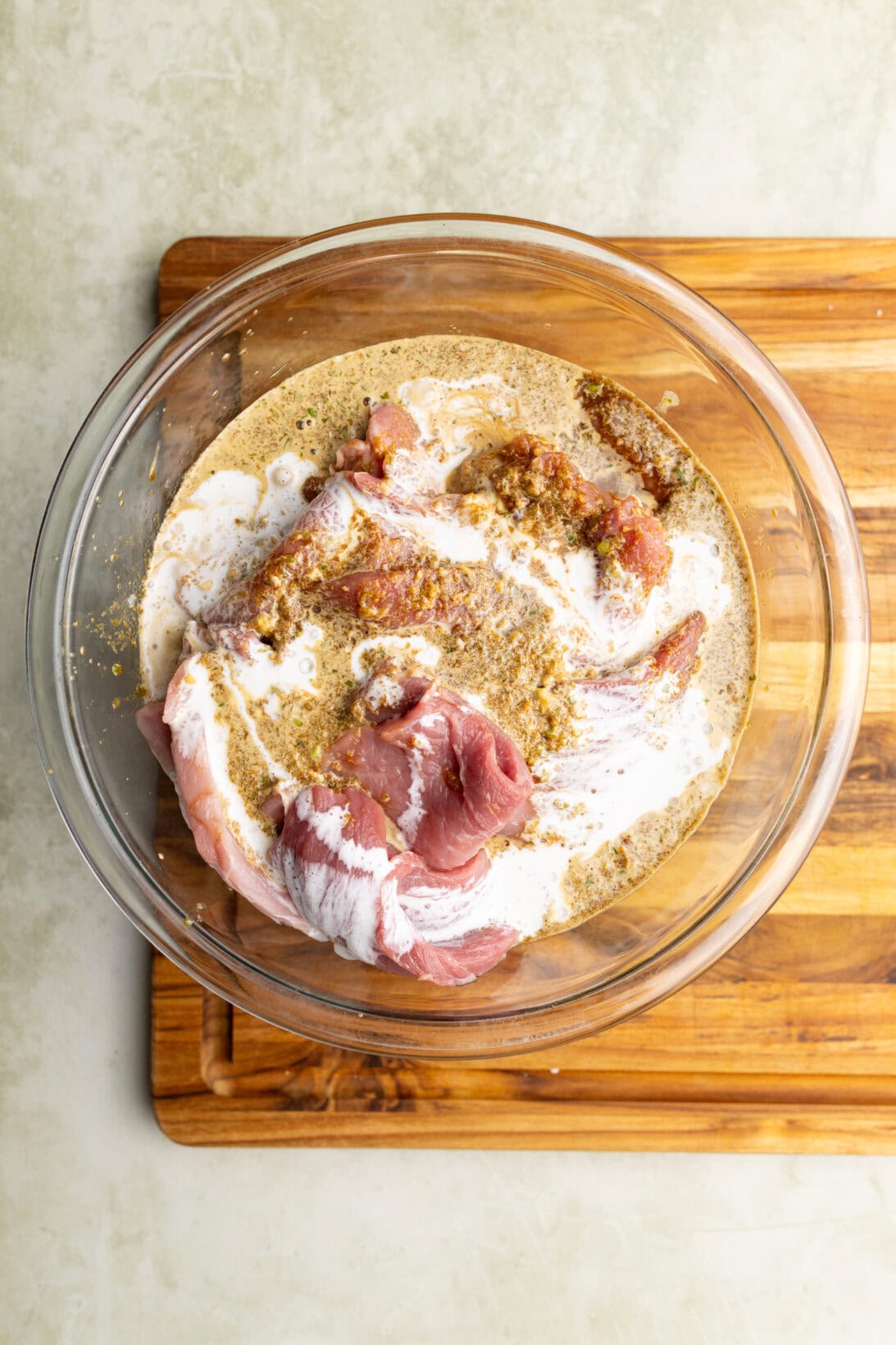
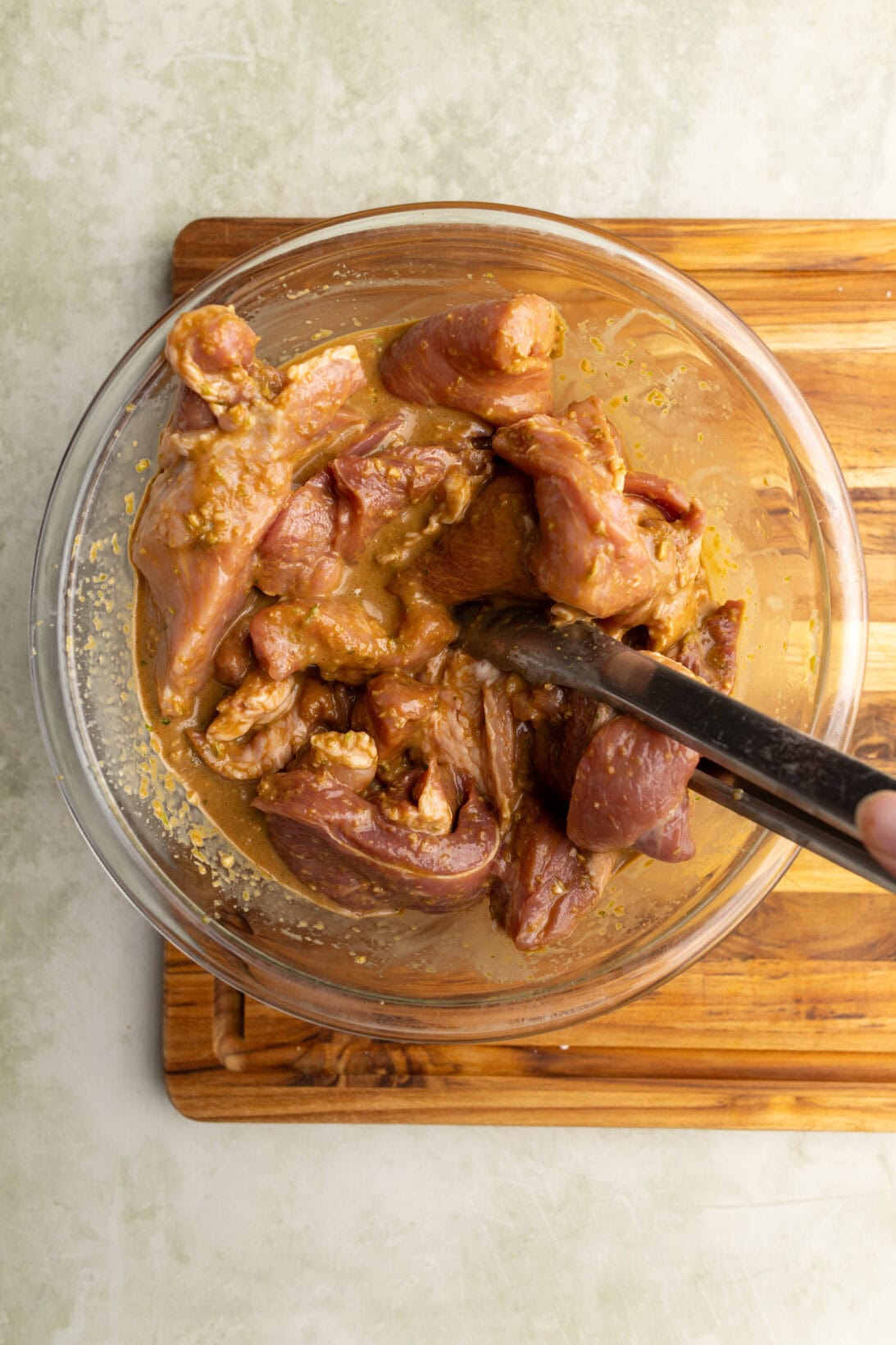
2. Make + Marinate – To your blender, add coconut milk, oil, cilantro stems, soy sauce, dark soy sauce, oyster sauce, brown sugar, fish sauce, white pepper, garlic, and 2 tablespoons of water. Blend until smooth, then pour the marinade over the pork. Toss to coat evenly, cover the bowl with plastic wrap or aluminum foil, and refrigerate for at least 4 hours, preferably overnight for optimal flavor.
3. Skewer – At least an hour before the pork is done marinating soak the skewers in water. Ribbon 2–3 pieces of the marinated pork onto each soaked skewer, zig-zagging the meat back and forth as you go. The folds should be touching but not tight. If they are tight you risk the pork not cooking in the center. Rest the skewers for 15 minutes.
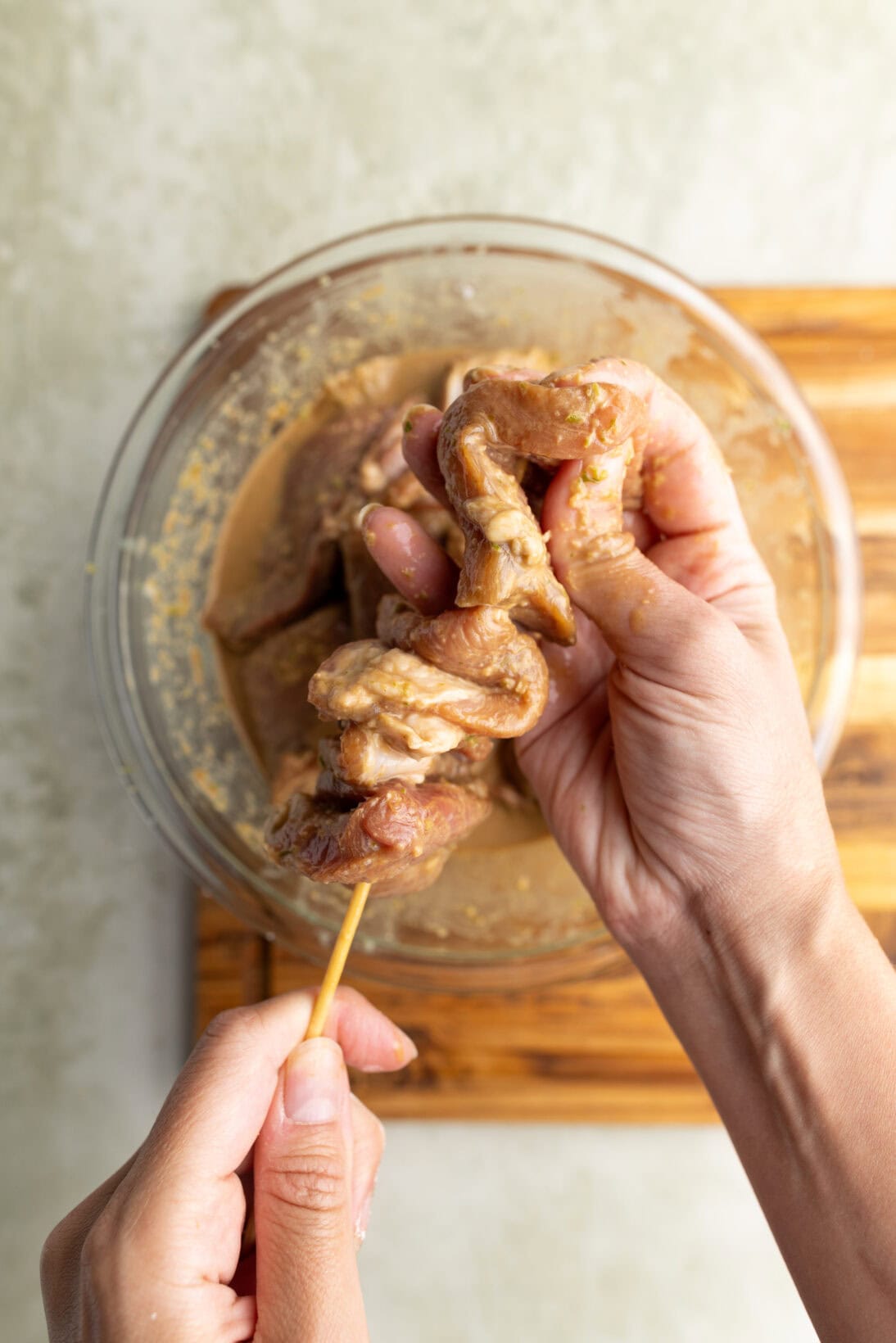
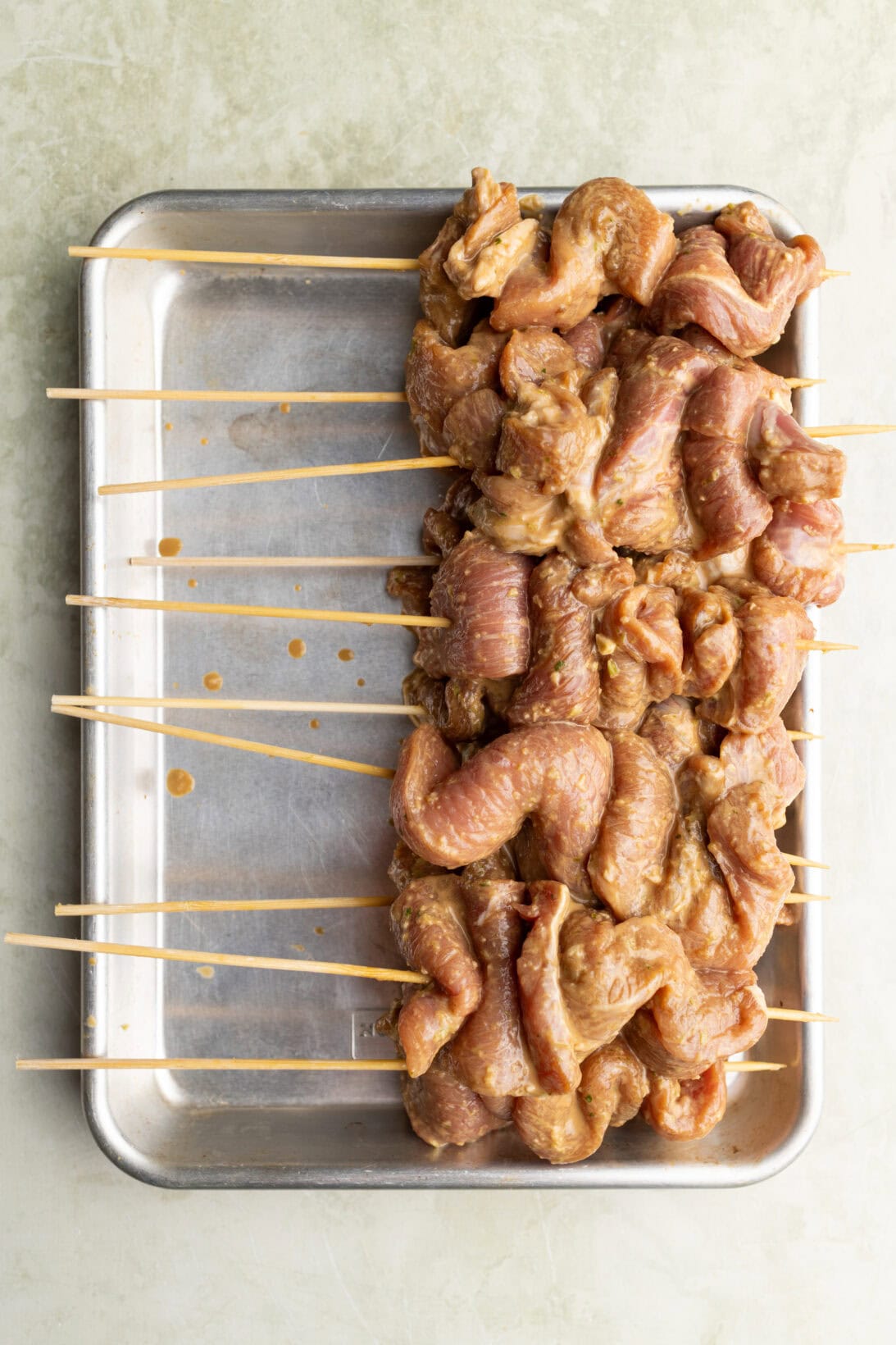
step by step: skewering the moo ping.
step by step: finished moo ping skewers

4. Grill – Preheat the grill to 500°F. Once hot, place the skewers on clean grates and cook for about 15 minutes, rotating every 5 minutes to ensure even cooking. The pork is done when it reaches an internal temperature of 145°F (if using a thermometer). Remove from the grill and serve with sushi rice.
Recipe Video

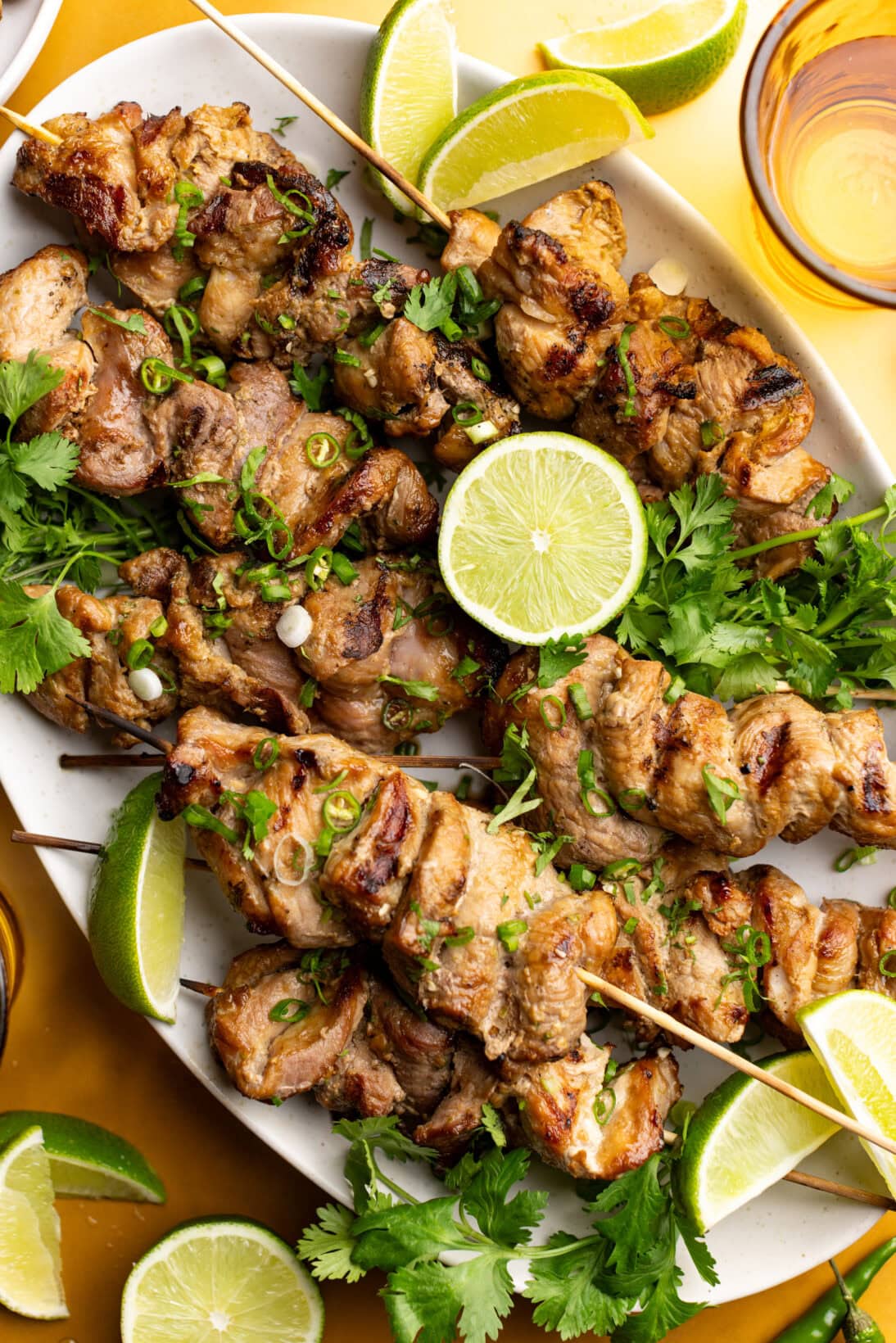
a serving plate of moo ping skewers topped with chilies, cilantro, green onions and limes.

How To Serve Moo Ping

Moo Ping is usually served with sticky rice, and personally I like to pair it with a handful of fresh cilantro for brightness (you know my love of cilantro). The grilled skewers are already pack plenty of flavor, but if you’re looking for a touch of acid, squeeze a wedge of lime over the top before serving. If you are looking to round out the meal, I recommend throwing some simply seasoned vegetables on the grill. Zucchini and squash tossed with olive oil and a pinch of salt make an easy, delicious and healthy side that doesn’t take away from the boldly flavored pork.

Frequently Asked Questions

I don’t eat pork, can I swap out the meat?

Yes! Instead of pork, cube, marinate, and skewer chicken thighs (sorry breasts won’t work here). While the flavor will be slightly different, chicken thighs are an excellent alternative.

Can I make Moo Ping without the grill?

Technically yes, but the smoke from the grill does impart additional flavor. You can roast them as well. I would cook at 425°F rotating after 7 minutes, until the internal temperature reaches 145°F, then let the pork rest for 5 minutes before serving.

Can I freeze Moo Ping?

Yes, but only before cooking. Place the marinating moo ping in a plastic bag, squeeze out the air and store for up to 2 months. When ready to cook defrost completely in the fridge before skewering.

Storing/Reheating

Moo Ping can be stored on skewer or off, in an airtight container in the refrigerator for 2-3 days. When. ready to enjoy, re-heat in a 350°F oven for about 10 minutes or until warmed throughout.

July 25, 2025

Moo Ping (Thai Pork Skewers)

Print Recipe Pin Recipe
A popular Thai street food, Moo Ping features pork marinated in a savory yet sweet sauce and grilled until perfectly caramelized.
Course Dinner
Cuisine Thai
Keyword Grilling, Pork and Cabbage, Skewers, Street Food
Prep Time 15 minutes
Cook Time 15 minutes
Resting Time 1 day
Total Time 1 day 30 minutes
Servings 5 people

Equipment

  • 10-12 wooden skewers

Ingredients

  • 2 ½ lbs pork butt or pork shoulder
  • 5 garlic cloves
  • 2 tbsp soy sauce
  • 1 tbsp dark soy sauce
  • 1 tbsp oyster sauce
  • 1 tbsp brown sugar or palm sugar
  • ¼ cup cilantro stems
  • 2 tsp fish sauce
  • ¼ tsp white pepper
  • ¼ cup neutral oil canola, vegetable, or avocado
  • ¼ cup unsweetened coconut milk
  • Sushi rice for serving

Instructions

  • Begin by preparing the pork: Cut it into 1/4-inch strips, about 3 inches long, preferably against the grain. Place the sliced pork in a bowl and season with a generous pinch of salt.
  • In a blender, combine the garlic cloves, both soy sauces, oyster sauce, brown sugar, cilantro stems, fish sauce, white pepper, oil, and coconut milk. Add 2 tablespoons of water and blend until smooth.
  • Pour the marinade over the pork and mix well to coat. Cover the bowl with plastic wrap and marinate for at least 3 hours, preferably overnight.
  • While the pork is marinating, soak the wooden skewers in water. This can also be done overnight.
  • When done marinating, ribbon on 2-3 pieces of pork on the skewer. Folding the meat in a zig-zag motion. The folds of pork should be touching but not tight.
  • Preheat the grill to 500°F. Once hot, place the skewers directly on clean grates. Close the lid and cook, rotating every 5 minutes. Cook for 15 minutes, or until the internal temperature reaches at least 145°F (always check for doneness before removing off the grill).

Nutrition

Nutrition Facts
Moo Ping (Thai Pork Skewers)
Amount per Serving
Calories
352
% Daily Value*
Fat
 
24
g
37
%
Saturated Fat
 
7
g
44
%
Trans Fat
 
0.04
g
Polyunsaturated Fat
 
4
g
Monounsaturated Fat
 
12
g
Cholesterol
 
93
mg
31
%
Sodium
 
797
mg
35
%
Potassium
 
543
mg
16
%
Carbohydrates
 
5
g
2
%
Fiber
 
0.4
g
2
%
Sugar
 
3
g
3
%
Protein
 
28
g
56
%
Vitamin A
 
9
IU
0
%
Vitamin C
 
2
mg
2
%
Calcium
 
33
mg
3
%
Iron
 
2
mg
11
%
* Percent Daily Values are based on a 2000 calorie diet.

RATE + REVIEW

Your email address will not be published. Required fields are marked *

*

Recipe Rating